French hospital fined €500,000 after breach exposes data of 727,000
France’s data protection authority (CNIL) has fined Hôpital privé de la Loire €500,000 ($580,000) for failing to adequately protect patients’ and their relatives’ data. […]

France’s data protection authority (CNIL) has fined Hôpital privé de la Loire €500,000 ($580,000) for failing to adequately protect patients’ and their relatives’ data. […]

Microsoft says a known issue that reverts mouse settings after installing the KB5120998 August 2026 preview update affects only non-English Windows 11 systems. […]

Being a tech aficionado was never the cheapest hobby out there, but these days, it’s even worse than usual. That’s why I tend to advocate looking for cheap upgrades instead of spending lots of money, with tips on how to avoid needing to buy a new router, for instance.

In a tech support scam, criminals pretend to work for a trusted technology or security company. They claim there is a problem with your device, software, subscription, or account, then try to persuade you to pay them, share personal information, or give them remote access to your computer.
These scams used to rely mainly on browser locks and fake virus warnings. Now, scammers use many more ways to reach people, including websites and platforms they trust.
As well as copying the websites of reputable brands, tech support scammers abuse sponsored search results, hijack on-site searches, create fake listings on trusted platforms, and use renewal scams, fake calendar invites, Apple Pay notifications, and many other methods to persuade people to call them.
Once someone makes contact, the scammers may demand payment, ask for personal information, or try to persuade them to install remote access software.
Beware of someone wanting to connect to your computer remotely. One of a tech support scammer’s most powerful weapons is the ability to connect remotely to a victim’s computer. If you allow this, the scammer may gain access to all of your files, folders, and the information they contain.
Tech support scams affect Malwarebytes directly because scammers often impersonate trusted security companies, as in the example below.
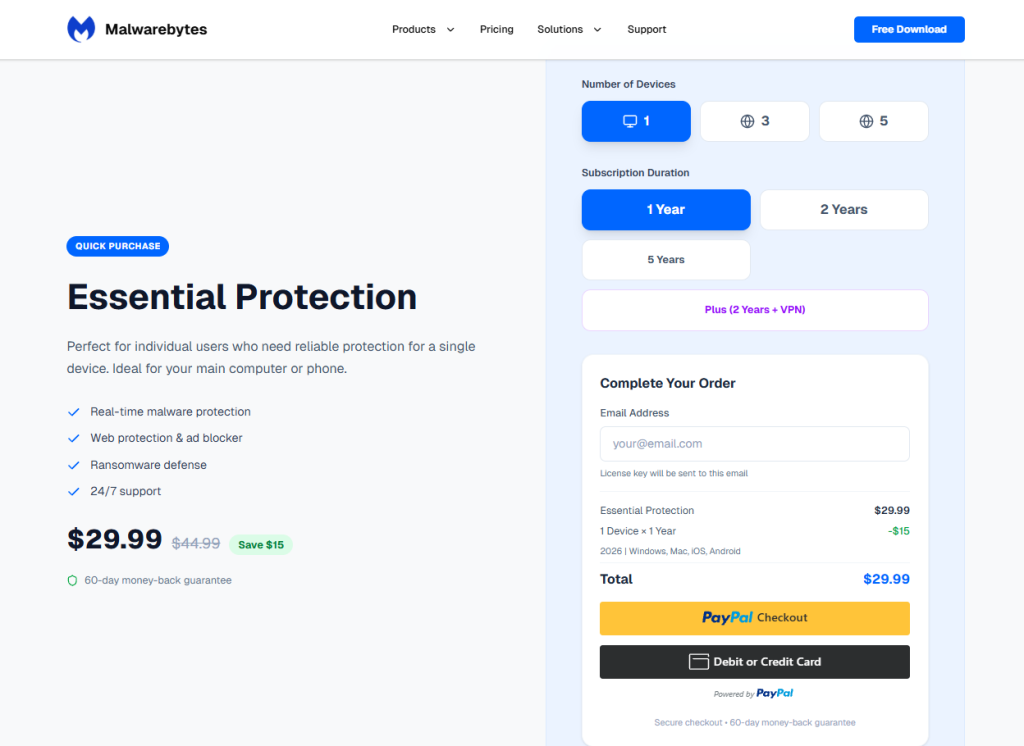
You can tell it’s not the real Malwarebytes when:
If you’ve fallen victim to a tech support scam, here are a few steps you can take:
Malwarebytes researchers actively fight tech support scams in the US and overseas. They work closely with the Federal Trade Commission (FTC), providing technical evidence to help shut down tech support scammers and educating internet users about the latest tactics and how to protect themselves.
Malwarebytes is also a supporting member of the Global Anti-Scam Alliance (GASA), working with other organizations committed to reducing scams and keeping people safer online.
Malwarebytes Scam Guard helps you analyze suspicious links, texts, and screenshots instantly.
Available with Malwarebytes Premium Security for all your devices, and in the Malwarebytes app for iOS and Android.

After years of jumping between Google Pay and Google Wallet, the company finally settled on Google Wallet as its one-stop destination for everything from contactless payments to digital IDs. Here are some of its helpful features to make your life easier.

Windows’ built-in archive manager is getting better these days. But for more advanced features, you’ll likely need a third-party tool. After using 7-Zip for a long time, I found NanaZip. It impressed me so much that I quit using alternatives.

Don’t assume the multi-point inspection of your car helps you in a real way that isn’t for the dealer. Sometimes they’re just looking for easy ways to sell you more services you can do at home for much less. You pay a bit more upfront for the equipment, but you don’t need to be a professional to take care of your vehicle. You can do plenty at home for cheap.

Two security vulnerabilities in the PaperCut NG and MF print management software, patched last week after being exploited as zero-days, are now being abused in data theft attacks. […]

Microsoft is investigating a widespread service issue causing authentication issues and email delays and failures for Exchange Online customers. […]

These days, most of us share files using methods like email or cloud storage with shareable links. While thumb drives don’t seem to be going anywhere, the days of carrying one around with you wherever you go are long over.